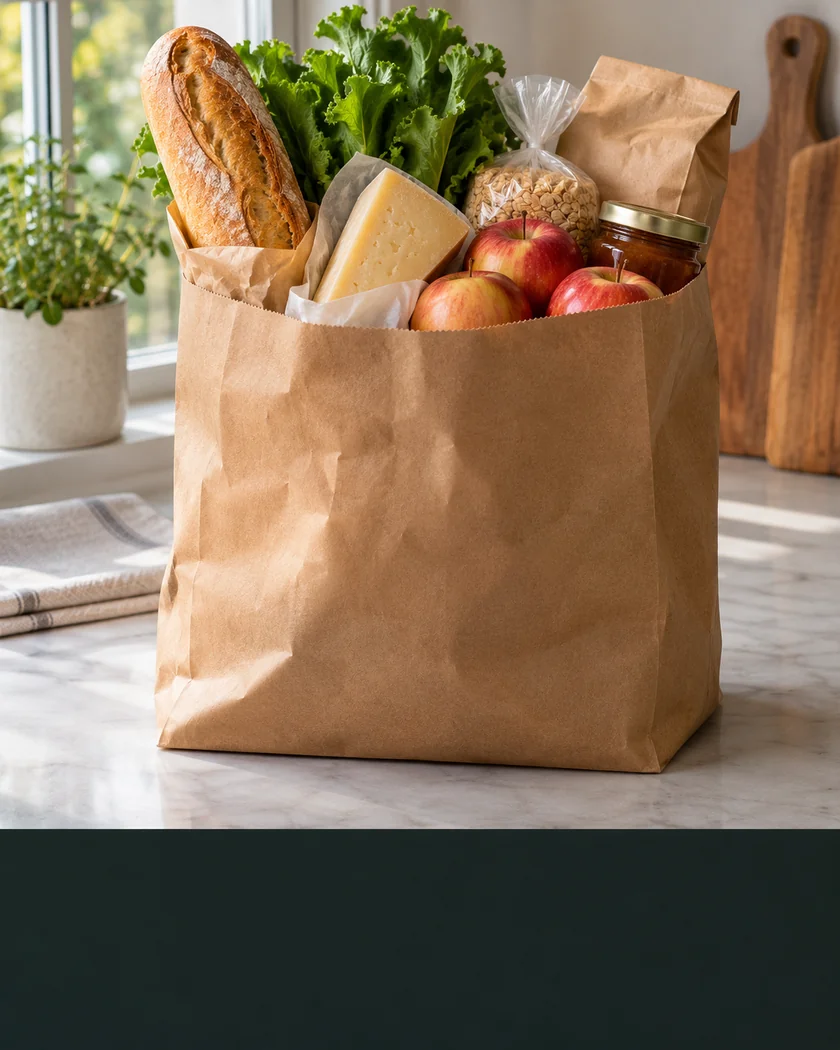
Check each food by its ingredients and the country you are bringing it from. Cheese, sausages and a homemade filled pie may be subject to different restrictions, even when they are small gifts.
This guide covers personal luggage brought from abroad into England, Scotland and Wales — Great Britain. Northern Ireland, postal consignments and commercial goods have separate rules.
Four things to check
- Where you are bringing the food to and from. This guide concerns entry into Great Britain. Identify the country you are bringing the food from, where it was produced and any transit stops: these are different facts. The country groups for animal and plant products differ; a connection or purchase in the EU does not, by itself, settle the question of origin.
- All ingredients. The filling, milk content and type of meat matter more than the name of the dish.
- Quantity and purpose. The conditions below concern personal use.
- Documents. Some products require plant health documents or a CITES check. A receipt helps establish the purchase, but does not itself authorise importation.
Meat, sausages and food with meat fillings
From the EU, Switzerland, Norway, Iceland, Liechtenstein, the Faroe Islands and Greenland: current animal health restrictions prohibit pork, beef, lamb, mutton, goat, venison and products made from these meats, including sausages. Poultry and poultry products are allowed for personal use.
From other countries: you cannot bring meat or meat products in personal luggage. This also applies to homemade food containing meat. Before packing sausages or pâté, check which meat they contain and the country you are bringing them from.
Cheese, Parmesan, milk and other dairy products
Current restrictions prohibit milk and dairy products, including cheese, butter and yoghurt, also when travelling from the European country group listed above. Hard cheese and Parmesan do not gain an exemption because they are matured, in a small pack or bought at an airport.
For other countries, milk and milk-based products are prohibited, with specific exceptions for baby food and food required for medical reasons. Sweets and baked goods have their own ingredient conditions — see the relevant section.
Fish, seafood, honey and other animal products
Fish, eggs and honey from the EU, Switzerland, Norway, Iceland, Liechtenstein, the Faroe Islands and Greenland are allowed for personal use.
From other countries, you can bring a combined total of up to 20 kg of fish and permitted fish products per person, including lobsters and prawns. Fresh fish must be gutted; processed fish must be dried, cooked, cured or smoked. Honey, live mussels and oysters, prepared snails, frogs’ legs and insect protein have separate conditions and a limit of up to 2 kg per person. Snails must be preserved or shelled, cooked and prepared; frogs’ legs must be the hind part with the skin and internal organs removed.
Check caviar and products from protected species separately. The general fish allowance does not automatically permit caviar or eel. CITES rules contain a narrow exception for sturgeon caviar (Acipenseriformes): up to 125 g per person, for personal use, in personal luggage, in individually marked containers meeting the requirements. This is an exception from the CITES permit requirement, not from animal health rules, the exporting country’s rules or other restrictions. The food guide states the caviar permit requirement more strictly; ask APHA before travelling whether the exception applies to the species, labelling and route. See special items and CITES.
Baby food and special food
Up to 2 kg per person of powdered infant milk, infant food or special food required for medical reasons is allowed. This limit and its conditions also apply to the European country group above, not just other countries. The product must not need refrigeration before use and must be in branded, unopened packaging, except for a pack already in use during the journey.
Check the weight, labelling and storage requirements in advance. Ordinary yoghurt or cheese does not become baby food simply because you are bringing it for a child. Check security rules for liquids and food in hand luggage separately with the departure and transit airports.
Fruit, vegetables, nuts and seeds
From the EU, Switzerland and Liechtenstein, the food guide allows fruit, vegetables, nuts and seeds for personal use. This country group differs from the one for fish and animal products. Some species have additional plant health requirements: specialist plant rules require a certificate for potatoes and certain seeds, among other items. The general food guide therefore does not authorise every plant product.
From other countries, most fruit and vegetables require a phytosanitary certificate from the authorised body in the country of departure. Exceptions without that certificate include pineapple, kiwi, coconut, citrus fruit, kumquat, persimmon, durian, curry leaves, banana and plantain, mango, dates, passion fruit and guava; also certain processed and packaged plant products, peeled and processed nuts, nut butters and certain grains, such as rice.
Do not automatically apply the exception for peeled and processed nuts and nut butters to raw nuts in their shells: check the species, processing and country. Seeds for sowing, live plants, young plants and flowers require separate checks by species and country. The food guide does not replace the rules for plants and planting material.
Sweets, bread, biscuits and other foods
The general food rules provide exceptions for bread without meat or dairy fillings, cakes without fresh cream, biscuits, chocolate and confectionery without large amounts of unprocessed dairy ingredients. Pasta and noodles must not be mixed with meat or have a meat filling.
The list also includes packaged soups, stocks and flavourings, processed packaged plant products and supplements containing a small amount of animal product, such as fish oil capsules. Calling something a sweet does not replace checking its ingredients: a cream dessert, a sweet and a cheese gift may have different conditions.
Common questions about food
Can I bring homemade food?
Check the ingredients and the applicable route. Homemade preparation does not create an exception for prohibited meat or dairy products. For a mixed dish, check its filling, sauce and base separately.
Does vacuum packaging help?
It helps preserve food, but does not override an animal health prohibition. Baby food and special food also have specific packaging, storage and other conditions.
What if the food is a gift for relatives?
A gift must still meet food restrictions. Pack permitted gifts so that their ingredients can be shown. For purchased goods, also consider the personal value allowance.
Can I bring food bought in duty free?
Where you buy it does not remove prohibitions or animal health conditions. A duty-free receipt does not separately authorise cheese or sausages. See also how duty-free purchases count.
If food is prohibited or the rule is unclear
If you discover at the border that food is prohibited, or are unsure about its ingredients or import conditions, use the red channel or customs phone before leaving the control area. Explain what you are carrying. Prohibited food voluntarily declared will be seized and destroyed; paying duty does not make it permitted. Failure to declare can lead to a fine or prosecution.
Before travelling, ask the competent authority about the particular food and country. This article does not determine food import rules for Northern Ireland or another country after leaving Great Britain. Ordinary pet food and medical pet food also need separate checks: the conditions for infant food cannot simply be applied to them.
Animal and plant health measures may change before you travel. This LAT guide helps you prepare your personal luggage.
Checked: 18/11/2026. Conditions may change; check the rules before travelling.